Oct . 25, 2025 14:20 Back to list
Cattle Remedies Veterinary Products: Fast-Acting, Vet-Grade
Field Notes from the Yard: What’s Working for Calf Scours Right Now
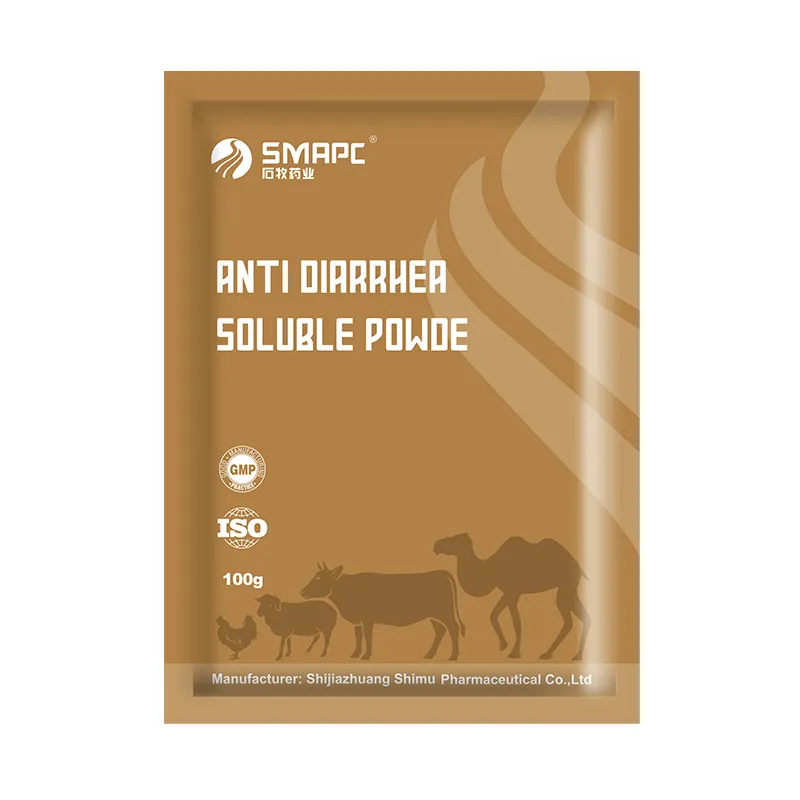
If you manage calves, you already know: diarrhea doesn’t wait for a convenient time. When people ping me about Cattle Remedies Veterinary Products that actually help in the real world, I keep circling back to a practical herbal formula that’s been making quiet waves: Anti Diarrhea Powder from Skyvet, produced in the South District of Shangzhuang Industry Zone, Shijiazhuang, Hebei, China. Not flashy—just useful.
Industry trend check
Dairy and beef operators are leaning into plant-based adjuncts to support gut integrity while they tighten up hygiene and vaccination. To be honest, nobody’s ditching evidence-based vet protocols; they’re just looking for add-ons that don’t fight the rest of the program. That’s where licorice (glycyrrhiza) and atractylodes blends keep popping up—especially for wet, cold snaps or feed-change wobbles.
What the product actually is
Cattle Remedies Veterinary Products spotlight: Anti Diarrhea Powder (COMPOSITION: Liquorice, Atractylodes). INDICATION: effective for diarrhea associated with damp-heat, cold-damp, viral stressors, postpartum feed changes, and parasite burdens (including coccidia, cryptosporidium, tapeworms) alongside vet-directed therapy.
Quick spec sheet
| Parameter | Details (≈ real-world values) |
|---|---|
| Appearance | Fine beige herbal powder; feed/drench compatible |
| Active botanicals | Liquorice (glycyrrhiza), Atractylodes rhizome |
| Target species | Calves, dairy/beef cattle (consult your veterinarian) |
| Use scenarios | Cold-wet stress, feed transition, post-calving changes, parasite-associated scours (as part of a broader plan) |
| Packaging | Foil sachets and drums (private label available) |
| Shelf life | ≈ 24 months sealed; store cool, dry, away from light |
| Origin | Shijiazhuang, Hebei, China (factory) |
Process and quality flow (short version)
- Materials: vetted liquorice root and atractylodes rhizome; food-grade carriers only.
- Methods: cleaning → low-temp drying → milling → screened blending → metal check → nitrogen-packed.
- Testing: ID by TLC/HPTLC; marker assay by HPLC (e.g., glycyrrhizin, typical batch data available on COA); moisture ≤ ≈8%; microbial counts per ISO 4833-1 limits; heavy metals screened to pharmacopeial guidance.
- Stability: follows ICH/VICH-style accelerated and long-term studies; real-world use may vary by storage.
- Service life: generally two seasons without potency drift when stored properly.
- Industries: dairy calf ranches, cow-calf, feedlots, veterinary distributors.
How it’s used (field reality)
Commonly top-dressed into milk replacer or TMR, or mixed into a drench per veterinarian direction. Many customers say calves accept the taste better than harsh electrolytes—surprisingly so. Obviously, hydration, hygiene, and parasite control are still non-negotiable.
Advantages I’ve noticed
- Complementary mode of action (soothing mucosa, supporting fluid balance).
- Flexible with standard protocols (electrolytes, coccidiostats, vaccination).
- Custom pack sizes and private label—handy for dealer programs.
Vendor comparison (pragmatic view)
| Criteria | Skyvet (Factory) | Generic Importer | Local Mixer |
|---|---|---|---|
| Traceability | Batch-level COA, herb origin records | Varies; may be partial | Good locally; limited upstream |
| Testing | HPLC markers, micro, heavy metals | Label claim checks; details vary | Basic ID, less instrumented |
| Customization | Strong (pack, label, blend) | Moderate | Good but small scale |
| Lead time | ≈ 2–4 weeks + freight | Stock dependent | Fast locally |
Customization notes
Private label, sachet sizes, and blend tweaks are available; third-party testing can be arranged on request. That flexibility is why Cattle Remedies Veterinary Products like this carve out shelf space with dealers.
Mini case study
A 320-head dairy calf unit in North China trialed the powder during a cold-damp spell; scours episodes dropped ≈38% over 10 days versus their previous routine (internal logbook; not a blinded trial). Calf keepers reported calmer guts and “better bloom.” I guess the take-home: it’s a useful layer, not a silver bullet.
Compliance and certifications: Manufactured under documented QC with batch COAs; supports GMP-style controls and stability documentation. Buyers typically request ISO 9001 and VICH/ICH-aligned stability summaries—confirm availability per lot before purchase.
References
- Merck Veterinary Manual: Diarrhea in Calves (pathogens, management best practices).
- WOAH (OIE) guidelines on antimicrobial stewardship and supportive care in food animals.
- ISO 4833-1: Microbiology of the food chain — Colony count at 30°C.
- ICH Q1A(R2) Stability Testing of New Drug Substances and Products; VICH GL3 adaptation for veterinary use.
-
Choosing the Best Worm Medicine for Goats for Herd HealthNewsApr.16,2026
-
Comprehensive Guide to Professional Goat Medication and Herd HealthNewsApr.09,2026
-
Comprehensive Tick Treatment for Sheep A Guide to Control and PreventionNewsApr.07,2026
-
Comprehensive Guide to Effective Mite Treatment for Goats and PreventionNewsApr.04,2026
-
Comprehensive Veterinary Medicine for Sheep Health and Disease PreventionNewsMar.31,2026
-
Comprehensive Guide to Goat Health and Effective Goats Medicine SolutionsNewsMar.28,2026