Oct . 11, 2025 11:55 Back to list
Pigs Medicine: Deworming & Appetite Treatment + Free PDF
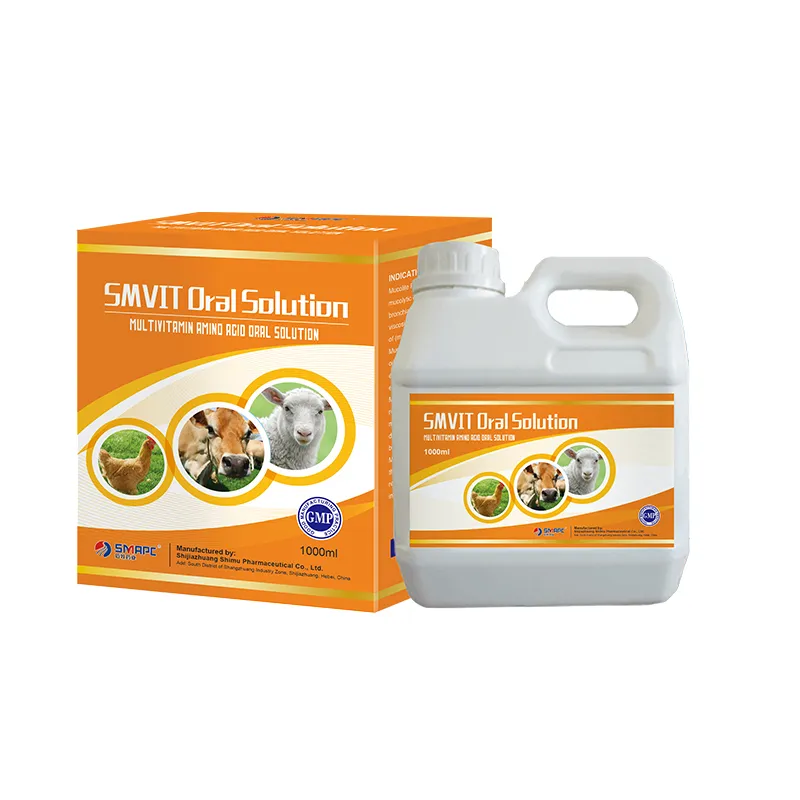
Multivitamin Amino Acid Oral Solution for modern pig farms: practical notes from the field
If you’ve been scanning the market for pigs medicine that actually slots into day-to-day operations without drama, this formulation is worth a closer look. It’s a vitamin-and-amino-acid oral solution made in the South District of Shangzhuang Industry Zone, Shijiazhuang, Hebei, China—factory setting, consistent batches, and, frankly, the kind of reliability producers quietly value during peak production or stressful transitions.
What’s trending in pigs medicine
- Stress mitigation via rapid, water-soluble nutrition during weaning, vaccination windows, heat spikes, or diet shifts.
- Cleaner labels and transparency: producers want clear assay ranges and batch COAs, not marketing fluff.
- Flexible dosing and compatibility with common water systems and farm logistics.
Product snapshot and technical specs
Multivitamin Amino Acid Oral Solution (all species; commonly used in pigs for vitality support). In practice, people deploy it before/after vaccinations, during transport, and when feed changes rattle performance. To be honest, timing matters as much as the formula.
| Parameter | Specification (≈ real-world) |
|---|---|
| Core actives | Vitamins A, D3, E, B-complex; amino acids incl. lysine, methionine, threonine (ratios tailored for water solubility) |
| Solvent / form | Aqueous oral solution, clear to slightly amber |
| pH | ≈ 4.5–6.5 (optimized for stability; farm water may affect) |
| Typical use in pigs | Per label and veterinarian guidance; commonly added to drinking water around stress periods; dosage may vary by weight and intake |
| Service life | ≈ 24 months sealed; after opening, use promptly and keep capped; always check lot label |
Process flow and quality checkpoints
- Materials: pharma/food-grade vitamins and amino acids; deionized water; stabilizers as needed.
- Methods: controlled-order blending, in-line homogenization, microfiltration; low-shear to protect vitamins.
- Testing you should request: identity/assay (HPLC/UV-Vis), pH (ISO 10523), microbial limits (ISO/USP-style), stability (accelerated/real-time), heavy metals screening.
- Packaging: HDPE or PET bottles with tamper-evident caps; carton-packed.
- Industries: pig farms, integrators, feed distributors, veterinary clinics.
Applications and advantages on-farm
- Before/after vaccinations, heat waves, weaning, transport—when pigs need fast-absorbing support.
- Waterline delivery simplifies labor; compatible with most medicators.
- Many customers say piglets “perk up” within a day or two; feed conversion shifts of around 1–2% have been reported anecdotally (your mileage may vary).
Vendor comparison (buyer’s quick scan)
| Vendor | Origin | Docs/Certs (ask for) | Lead time | Customization | Notes |
|---|---|---|---|---|---|
| Skyvet Pharm (Factory) | Shijiazhuang, Hebei, China | GMP/ISO evidence, batch COA, stability summary | Often steady for standard SKUs | Bottle size, label/OEM, nutrient ratios | Factory-direct pricing; clear tech sheets |
| Regional Blender A | Local/Regional | Local GMP, COA per batch | Fast for small runs | High mixing flexibility | Convenient service; higher unit cost |
| Trading House B | Mixed sources | Supplier-declared | Variable | Label/pack only | Check origin and QC depth carefully |
Customization and OEM
Common requests: tweak vitamin E to suit heat stress programs, adjust lysine:methionine, sugar-free carriers for medicators, and private labels. I guess the best results happen when nutritionists share target water intake data up front.
Mini case notes
- 200-sow unit, summer: used solution 48 hours pre-/post-vaccination; caretakers reported steadier intake and fewer post-shot slumps.
- Nursery site: during diet switch, short pulse dosing helped keep gain on track; manager liked the “simple waterline add-in.”
Compliance pointers
Ask suppliers for GMP statements, ISO/IEC 17025 lab reports, and clearly indexed COAs. Cross-check nutrient targets with NRC swine guidelines and your vet’s plan. It sounds dull, but that paperwork saves headaches later.
Citations
- NRC. Nutrient Requirements of Swine, 11th Rev. Edition, 2012. https://nap.nationalacademies.org/catalog/13298/nutrient-requirements-of-swine-eleventh-revised-edition-2012
- Merck Veterinary Manual. Nutritional Requirements of Pigs. https://www.merckvetmanual.com/nutrition/feeding-pigs/nutritional-requirements-of-pigs
- WOAH (OIE). Terrestrial Animal Health Code – Welfare of pigs. https://www.woah.org/en/what-we-do/standards/codes-and-manuals/terrestrial-code/
- ISO/IEC 17025: General requirements for the competence of testing and calibration laboratories. https://www.iso.org/standard/66912.html
-
Choosing the Best Worm Medicine for Goats for Herd HealthNewsApr.16,2026
-
Comprehensive Guide to Professional Goat Medication and Herd HealthNewsApr.09,2026
-
Comprehensive Tick Treatment for Sheep A Guide to Control and PreventionNewsApr.07,2026
-
Comprehensive Guide to Effective Mite Treatment for Goats and PreventionNewsApr.04,2026
-
Comprehensive Veterinary Medicine for Sheep Health and Disease PreventionNewsMar.31,2026
-
Comprehensive Guide to Goat Health and Effective Goats Medicine SolutionsNewsMar.28,2026