Oct . 18, 2025 14:35 Back to list
Trusted Poultry Medicine Manufacturers|GMP-Certified OEM
Inside the Playbook of Modern Poultry Medicine Manufacturers
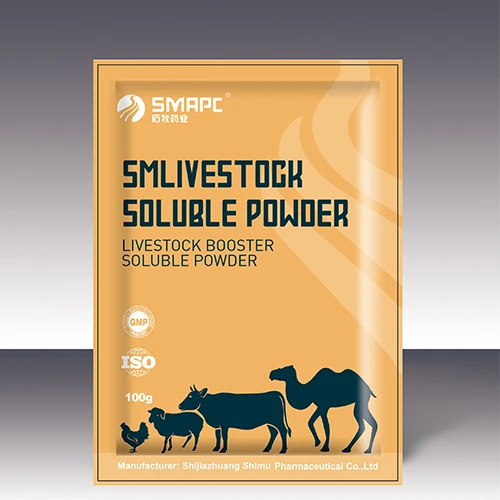
If you spend any time with integrators and farm vets (I do, sometimes with muddy boots), you’ll notice something: the best poultry medicine manufacturers are acting more like nutrition-tech companies than old-school drug houses. They’re blending botanicals, amino-acid chemistry, and clean-process QA into practical tools for day-to-day production. One example I’ve followed lately is a multi-species nutraceutical: Livestock booster from Shijiazhuang, Hebei, China.
Industry trends I’m seeing
Actually, the most interesting shift is formula transparency and residue awareness. Buyers ask for botanical actives, shorter withdrawal times, and data—real, audited data. Also, poultry medicine manufacturers are offering ruminant and multi-species lines to serve mixed farms and integrators that manage broilers, layers, cattle, or goats under one procurement umbrella. It sounds messy, but supply-chain simplicity wins.
Product snapshot: Livestock booster
Composition is straightforward: haw, malt, and radish seed. Indications (to be honest, familiar to any field nutritionist): promote digestion and appetite, increase feed conversion, support fat metabolism and meat quality, and help immunity by reducing viral/bacterial pressure while regulating GI function. Although pitched for cattle, sheep, and goats, the technology mindset overlaps with modern poultry health-support solutions.
| Parameter | Details |
|---|---|
| Composition | Haw, malt, radish seed (botanical blend) |
| Form | Powder or granule (≈, real-world packaging may vary) |
| Target species | Cattle, sheep, goats; complementary to poultry nutrition strategies |
| Function | Digestive support, feed efficiency, fat metabolism, immunity support |
| Shelf life | ≈24 months in cool, dry storage; check label |
| Certs & QA | GMP-compliant facility; ISO 9001/22000 and HACCP where applicable |
| Testing | Microbial limits, moisture, active ID; batch CoA issued |
Process flow, briefly
Materials: food-grade haw, malt, radish seed. Methods: cleaning, size reduction, controlled drying, blending, sieve homogenization, in-process QC, final pack. Testing standards: ISO 22000/HACCP frameworks; microbial counts aligned with feed additive norms; stability checks at 25°C/60% RH. Service life: ≈2 years sealed. Industries served: integrators, contract growers, feed mills, and export distributors. Origin: South District of Shangzhuang Industry Zone, Shijiazhuang, Hebei, China.
Real-world application
In mixed operations, managers pair botanical boosters with coccidiosis control and probiotic programs in poultry, while ruminants receive the digestion formula during ration transitions. Many customers say FCR stabilizes faster—could be correlation, but the feedback repeats across seasons.
Vendor landscape (my quick take)
| Vendor | Footprint | QA/Certs | Customization | Lead time |
|---|---|---|---|---|
| Skyvet Pharm | Hebei, China; export-ready | GMP, ISO 9001/22000 (docs on request) | Label, pack size, formula tweaks | ≈2–4 weeks after PO |
| Regional mixer | Country-limited | HACCP; partial ISO | Basic label only | Around 1–2 weeks |
| Global pharma corp | Global depots | Full GMP+; FAMI-QS | Limited (strict specs) | 4–8 weeks |
Customization and support
Buyers from integrators often ask for private labels, moisture targets tailored to humid climates, and carton sizes for container optimization. The better poultry medicine manufacturers will also share stability curves and CoAs batch-by-batch. It seems small, but auditors love it.
Mini case notes
Northern feedlot: post-weaning digestive dips were trimmed after introducing the booster during ration changeovers. A mixed farm with layers and goats reported steadier feed intake and, surprisingly, easier transitions during hot spells (anecdotal, yes—but recurring).
Compliance note: align usage with local veterinary guidance and feed laws; reference WHO/WOAH antimicrobial stewardship where relevant, even for non-antibiotic supports.
References:
1. WOAH (OIE) Feed and animal health standards – antimicrobial stewardship guidance.
2. ISO 22000:2018 Food safety management systems – Requirements.
3. Codex Alimentarius CAC/RCP 1-1969 (HACCP) – General principles of food hygiene.
-
Choosing the Best Worm Medicine for Goats for Herd HealthNewsApr.16,2026
-
Comprehensive Guide to Professional Goat Medication and Herd HealthNewsApr.09,2026
-
Comprehensive Tick Treatment for Sheep A Guide to Control and PreventionNewsApr.07,2026
-
Comprehensive Guide to Effective Mite Treatment for Goats and PreventionNewsApr.04,2026
-
Comprehensive Veterinary Medicine for Sheep Health and Disease PreventionNewsMar.31,2026
-
Comprehensive Guide to Goat Health and Effective Goats Medicine SolutionsNewsMar.28,2026