Oct . 23, 2025 15:50 Back to list
Vet Powder: Fast-Acting, Safe Care for Pets & Livestock
Inside the Supply Chain of Tiamulin Hydrogen Fumarate Soluble Powder
If you’ve been scanning the market for reliable Vet powder solutions for poultry and swine, you’ve probably noticed the same two trends I have: rising scrutiny on antimicrobial stewardship, and a quiet but resolute demand for quality-assured pleuromutilins. Tiamulin still anchors many respiratory and enteric programs—when it’s made right and supported by real QA, it works. Here’s a field-level look at the product, the process, and why some vendors quietly outperform.
What it is (and why it’s still relevant)
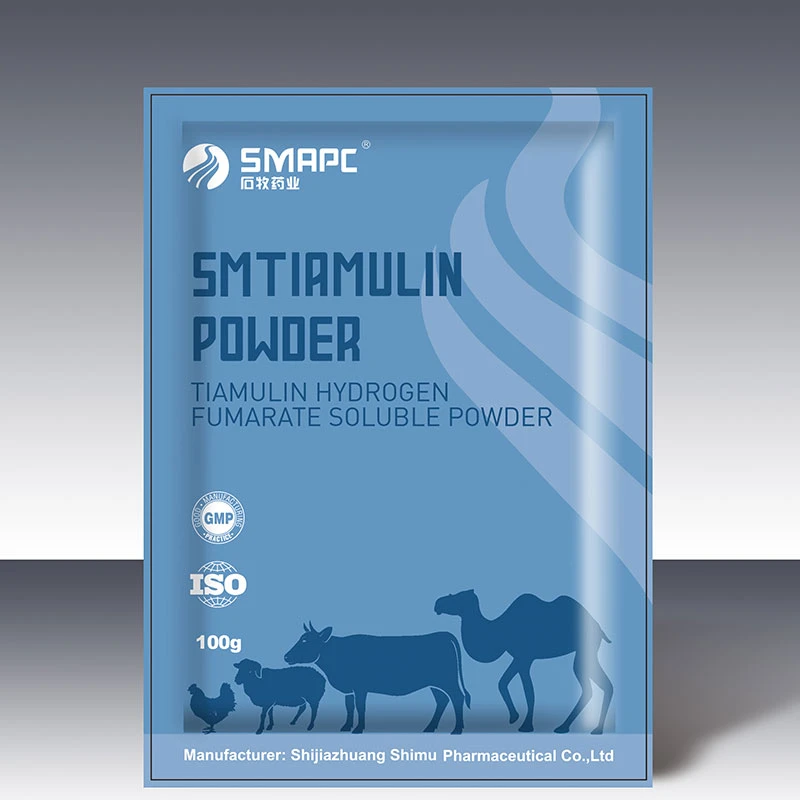
Tiamulin Hydrogen Fumarate Soluble Powder is a pleuromutilin antibiotic formulated for drinking-water medication. The specific reference product here lists: “Each g contains Tiamulin Fumarate 450 mg.” Indications include chronic respiratory disease in chickens, control of Mycoplasma spp., Actinobacillus pleuropneumoniae in pigs, and, notably, swine dysentery and porcine proliferative enteritis (ileitis). Many customers say the response curve is quick—usually within 48–72 hours—if water lines are clean and dosing is on point.
Product specifications (field-ready)
| Composition | Tiamulin Hydrogen Fumarate 450 mg/g (≈45% w/w) |
| Appearance | Off‑white to light yellow powder; freely soluble in water (real‑world mixing may vary) |
| Assay (HPLC) | 95.0–105.0% of label claim (batch release spec) |
| pH (1% solution) | ≈4.5–6.5 |
| Microbial limits | Conforms to CVP/Ph. Eur./USP general chapters (as applicable) |
| Packaging | Foil sachets/bags 100 g, 500 g, 1 kg; moisture‑barrier with tamper evidence |
| Shelf life | 24 months sealed; store 15–30°C, dry, protect from light |
| For | Veterinary use only |
How it’s made (short process flow)
- Qualified API sourcing (pleuromutilin derivative; CoA + DMF/ASMF where available).
- Precision weighing and blending with carriers under GMP cleanroom (ISO Class-controlled).
- In‑process controls: blend uniformity (RSD ≤5%), moisture (LOD), particle size.
- QC release: HPLC assay (USP ), ID by IR/UV, impurities, pH, microbiological limits.
- Packaging in humidity‑controlled zone; serialized outer labels for traceability.
- Stability program per ICH Q1A(R2) to verify service life.
Testing standards referenced by reputable plants include Chinese Veterinary Pharmacopoeia (CVP), Ph. Eur., and VICH guidelines. I’ve seen labs with ISO/IEC 17025 accreditation—worth asking for.
Use cases and field dosing
Poultry: for chronic respiratory disease and Mycoplasma control, typical programs run at 250–500 mg tiamulin HF/L of drinking water for 3–5 days (adjust to label and vet direction). Swine: for dysentery and ileitis, around 8–10 mg tiamulin/kg BW/day via water for 3–5 days is common. Always follow local label, withdrawal times, and compatibility notes—avoid concurrent ionophore coccidiostats known to interact.
Advantages I’ve observed
- Fast water solubility; fewer line blockages when premixed properly.
- Predictable MICs against Mycoplasma spp.; solid option where macrolide resistance is rising.
- Good handler feedback on sachet integrity and low dusting—small thing, big difference.
Vendor landscape (quick comparison)
| Vendor | Factory Origin | Certs | Lead Time | Customization |
|---|---|---|---|---|
| Skyvet Pharm (reference) | South District, Shangzhuang Industry Zone, Shijiazhuang, Hebei, China | Veterinary GMP, ISO 9001; in‑house QC (HPLC) | 7–15 days (in season) | Private label, pack sizes, COA per lot |
| Regional Distributor A | Mixed (outsourced) | ISO 9001 only | 2–4 weeks | Limited branding |
| Trading Company B | Various OEM | Claims GMP (verify) | Variable | MOQ dependent |
Customization and support
Options I’ve seen: 100 g to 1 kg packs, bilingual labeling, batch‑specific CoAs, and stability data on request. Some buyers push for water-line compatibility tests—smart move, honestly.
Mini case notes
- Broiler complex, 1.2M birds: Mycoplasma flare post‑transport. Vet powder at 300 mg/L for 4 days; MOR reduced by day 3; flock FCR normalized. Water sanitation was the hidden hero.
- Swine integrator, 8,000 head: Dysentery spike in 2 barns. Vet powder at ≈10 mg/kg BW via water for 5 days; visible stool improvement by day 2; follow‑up biosecurity audit closed the loop.
Compliance, data, and reality checks
Look for batch assays (≥99% of claim is common in fresh lots), impurities within pharmacopeial thresholds, and validated withdrawal times per your jurisdiction. Certifications to ask for: Veterinary GMP, ISO 9001, and, ideally, ISO/IEC 17025 for the testing lab. Antimicrobial stewardship matters—use only under veterinary direction.
References
- European Medicines Agency (EMA). Tiamulin summary of product characteristics and guidance.
- Merck Veterinary Manual. Pleuromutilins: pharmacology and clinical use in food animals.
- VICH Guidelines (GLs) on quality, safety, efficacy; USP General Chapter Chromatography.
-
Choosing the Best Worm Medicine for Goats for Herd HealthNewsApr.16,2026
-
Comprehensive Guide to Professional Goat Medication and Herd HealthNewsApr.09,2026
-
Comprehensive Tick Treatment for Sheep A Guide to Control and PreventionNewsApr.07,2026
-
Comprehensive Guide to Effective Mite Treatment for Goats and PreventionNewsApr.04,2026
-
Comprehensive Veterinary Medicine for Sheep Health and Disease PreventionNewsMar.31,2026
-
Comprehensive Guide to Goat Health and Effective Goats Medicine SolutionsNewsMar.28,2026