Oct . 08, 2025 22:45 Back to list
Veterinary powder for wounds, digestion & calcium—why us?
Field Notes on Kanamycin Sulfate Powder: What Buyers Really Ask (and What Matters)
If you source antibiotics for poultry, you’ve probably noticed how the market around veterinary powder has shifted—tighter stewardship, traceability demands, and buyers insisting on data, not just promises. I’ve toured factories and talked to integrators; the short version: details and documentation win.
The Product in a Nutshell
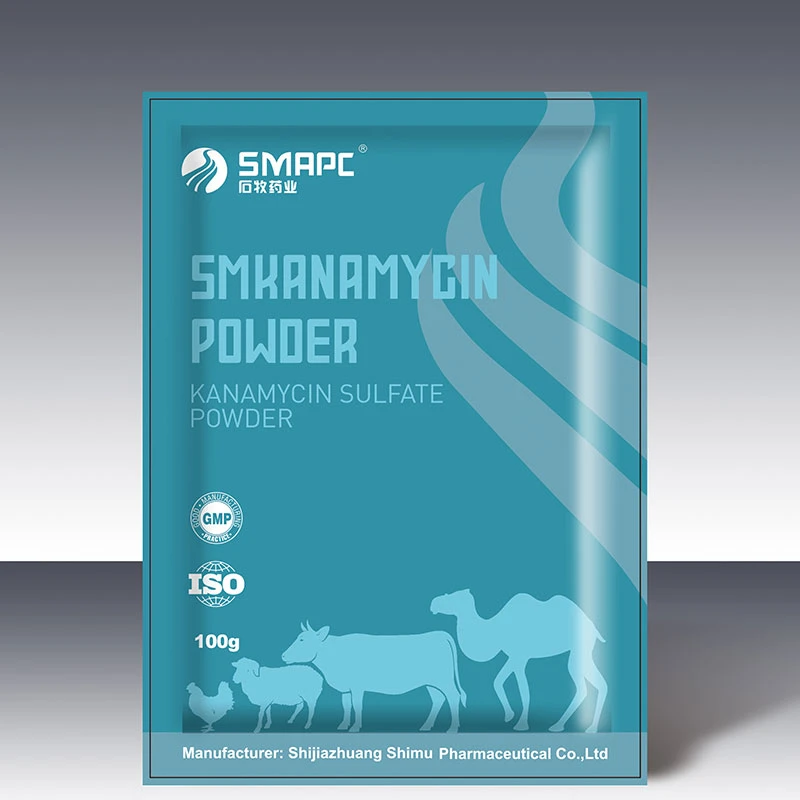
Product: Kanamycin Sulfate Powder For Veterinary Use Only — manufactured in the South District of Shangzhuang Industry Zone, Shijiazhuang, Hebei, China (factory origin). Label composition: Each 1 g contains Kanamycin 120 mg. Indication as provided: “For the treatment intestinal infection caused by chicken susceptible bacteria.” It’s concise, and yes, the phrasing is exactly as on the spec sheet.
| Parameter | Specification (≈) | Notes |
|---|---|---|
| Active content | 120 mg Kanamycin per g | Assay by HPLC per USP/ChP methods (real-world may vary ±5–10%). |
| Appearance | Free-flowing powder | Optimized for uniform mixing/suspension. |
| Microbial limits | TAMC/TYMC within pharmacopeial limits | Per ChP/USP microbial tests. |
| Moisture (LOD) | ≤6% (typical) | Dry rooms control caking risk. |
| Shelf life | 24 months (≈) | Per VICH GL3(R) stability guidance; store cool, dry. |
Where It’s Actually Used
- Poultry integrators tackling enteric bacterial challenges in broilers and layers.
- Veterinary distributors needing compliant veterinary powder for fast-moving farm accounts.
- Feed mills preparing medicated premixes under veterinary oversight (stewardship is non-negotiable).
Buyers often ask about withdrawal times and AMR policies; the right answer is: follow the prescribing veterinarian and local regulations—period.
Process Flow (How It’s Made and Checked)
- Fermentation-derived Kanamycin base (Streptomyces) → sulfate conversion.
- Purification and milling to controlled particle size for dose uniformity.
- Blend with carriers (as specified) to reach 120 mg/g assay target.
- In-process QC: assay (HPLC), moisture, blend uniformity, microbial limits.
- Packaging (sachets/drums) in dry rooms; tamper-evident sealing.
- Release tests: CoA issued; stability per VICH GL3(R)/ICH principles.
Testing standards referenced by buyers include USP/EP/ChP monographs, GMP batch records, and sometimes method validation briefs. It seems that complete dossiers get you to the shortlist faster.
Advantages We’ve Noted
- Consistent potency across lots (many customers say the CoA-to-field match is tight).
- Good dispersion in water and wet mash—less sediment than some veterinary powder lines.
- Factory origin in Hebei, China enables competitive lead times and pricing.
Vendor Snapshot (Comparison)
| Vendor | Origin | GMP/ISO | MOQ | Lead Time (≈) | Docs |
|---|---|---|---|---|---|
| Skyvet (Factory) | Shijiazhuang, Hebei, CN | GMP site; ISO 9001 (as provided) | Negotiable | 2–4 weeks | CoA, MSDS, stability summary |
| Trader A | Mixed | Varies | Higher | 4–6 weeks | CoA, limited |
| OEM B | SEA | GMP stated | Moderate | 3–5 weeks | CoA, partial validation |
Customization Options
Sachet sizes (e.g., 100 g, 500 g), carrier selection for flowability, and private-label artwork are common tweaks. For large programs, potency adjustments within regulatory limits are sometimes discussed—always under vet supervision. That’s how smart buyers tailor veterinary powder to their logistics and dosing protocols.
Mini Case Study
A 50k-bird broiler farm in MENA ran a 2-cycle trial. Reported outcomes (customer-supplied): mortality dropped from 4.3% to 2.5%, FCR improved by ~0.04, and fewer feed refusals due to better suspension of the powder in drinking systems. Single-site data; your mileage may vary, but the ops team was convinced.
Compliance, Stewardship, and Documentation
Look for: GMP certificates, ISO 9001, CoA per batch, MSDS, and stability data aligned with VICH GL3(R). Also check local approvals and observe antimicrobial stewardship frameworks (WOAH/WHO). To be honest, this paperwork is what separates a safe purchase from a risky one.
Authoritative References
- WHO: Critically Important Antimicrobials for Human Medicine (latest list) — https://www.who.int/publications
- VICH GL3(R): Stability Testing of New Veterinary Drug Substances and Products — https://www.vichsec.org
- USP–NF Monograph (Kanamycin Sulfate) — https://www.uspnf.com
- WOAH (OIE): Antimicrobial Resistance and Responsible Use — https://www.woah.org
-
Choosing the Best Worm Medicine for Goats for Herd HealthNewsApr.16,2026
-
Comprehensive Guide to Professional Goat Medication and Herd HealthNewsApr.09,2026
-
Comprehensive Tick Treatment for Sheep A Guide to Control and PreventionNewsApr.07,2026
-
Comprehensive Guide to Effective Mite Treatment for Goats and PreventionNewsApr.04,2026
-
Comprehensive Veterinary Medicine for Sheep Health and Disease PreventionNewsMar.31,2026
-
Comprehensive Guide to Goat Health and Effective Goats Medicine SolutionsNewsMar.28,2026