Oct . 27, 2025 15:00 Back to list
Veterinary Powder: GMP-Grade, Fast-Acting, Multi-Use Care
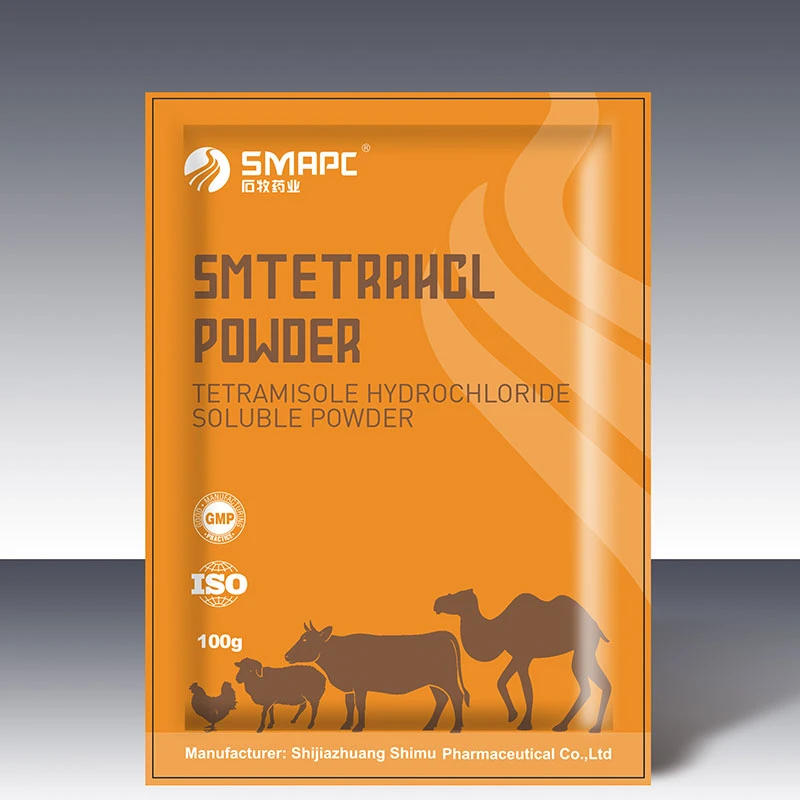
Tetramisole HCl Soluble Powder: What Buyers and Vets Are Really Choosing Today
If you’ve been sourcing Veterinary powder lately, you’ve probably noticed two things: water-soluble formats are winning, and audit-ready documentation now matters almost as much as price. This product—Tetramisole Hydrochloride Soluble Powder For Veterinary Use Only—ticks those boxes. It’s manufactured in the South District of Shangzhuang Industry Zone, Shijiazhuang, Hebei, China, an area that (to be honest) has quietly become a reliable base for GMP-style veterinary formulations.
What it is and why the market cares
Composition is straightforward: each 1 g contains 100 mg Tetramisole Hydrochloride (≈10% w/w). It’s a broad-spectrum anthelmintic covering gastrointestinal and lung nematodes—plus kidney worm, heartworm, and ocular parasites in livestock and poultry. Many distributors tell me the appeal is practical: dose via drinking water, treat groups fast, then verify efficacy with simple fecal egg count reduction tests. In field use, Veterinary powder formats like this help standardize deployment across barns and sheds without complex equipment.
Industry trends (quick reality check)
- Shift to water-soluble actives for rapid flock/herd coverage and lower labor.
- Resistance management is non-negotiable: rotation plans and diagnostics are being baked into procurement specs.
- Buyers are asking for VICH-aligned stability data and batch-level Certificates of Analysis (CoA).
Product specification (key points)
| Active | Tetramisole Hydrochloride ≈10% (100 mg/g) |
| Form | Water‑soluble powder, free-flowing; particle size around 80–200 mesh |
| Solubility / pH | Fully soluble in potable water; solution pH ≈ 3.5–5.5 |
| Packaging | Sachets or jars (e.g., 100 g, 500 g, 1 kg); customization on request |
| Shelf life | ≈24 months sealed in original pack (real‑world use may vary) |
| Quality tests | Assay by HPLC (90–110% label), identification, related substances, pH, uniformity, microbial limits |
| Standards referenced | Ph. Eur./USP methods where applicable; VICH GL39 stability framework |
Process flow (how it’s made, briefly)
- Materials: API Tetramisole HCl (traceable lot), pharm‑grade carriers, flow aids.
- Methods: calibrated blending, sieving, in‑process sampling for assay and homogeneity.
- Filling: low‑humidity line; oxygen/moisture barrier packaging.
- QC/QA: HPLC assay, microbial limits, dissolution check; stability per ICH/VICH climatic zones.
Where it’s used
Common in poultry integrations, small ruminant cooperatives, swine units, and mixed‑practice vet clinics. Integrators like Veterinary powder dosing because it syncs with water‑line medication systems. Always follow local veterinary guidance and resistance‑management protocols; diagnostics before and after treatment are, frankly, worth the effort.
Advantages we keep hearing about
- Broad nematode spectrum; fast deployment in water.
- Predictable cost per treated animal; minimal downtime.
- Documentation support: CoA + stability data upon request.
Vendor comparison (indicative)
| Vendor | Assay Consistency | Docs | Customization | Lead Time |
|---|---|---|---|---|
| Skyvetpharm (Factory, Hebei) | High (tight RSD across lots) | CoA + stability set | Pack size, label, spec | ≈2–4 weeks |
| Regional Distributor Blend | Medium | CoA only | Limited | ≈3–6 weeks |
| No‑Name Trading Lot | Variable | Sparse | None | Uncertain |
Customization and real‑world feedback
Private‑label pack sizes (100 g to 1 kg), multilingual artwork, and strength tuning (around 5–20% active) are typical requests. One poultry complex told me their switch to Veterinary powder cut labor by “a solid hour per house” on treatment days. Another goat co‑op, surprisingly, cared more about pH—milder solutions reduced drinker line complaints.
Compliance, testing, and service life
Expect validation packages aligned with Ph. Eur./USP methods, microbial limits testing, and stability per VICH GL39. Stored cool and dry, sealed packs typically last ≈24 months; opened packs should be resealed and used promptly (check local SOPs).
References (authoritative)
- VICH GL39: Stability Testing of New Veterinary Drug Products (EMA/US FDA/PMDA collaborative).
- Ph. Eur. and USP general chapters on chromatographic assay and microbial limits.
- WOAH (OIE) guidelines on sustainable anthelmintic use and resistance management.
- FAO/WHO JECFA monographs on veterinary drug residues and safety evaluation.
- Chinese Veterinary Pharmacopoeia (latest edition) applicable monographs and general methods.
-
Choosing the Best Worm Medicine for Goats for Herd HealthNewsApr.16,2026
-
Comprehensive Guide to Professional Goat Medication and Herd HealthNewsApr.09,2026
-
Comprehensive Tick Treatment for Sheep A Guide to Control and PreventionNewsApr.07,2026
-
Comprehensive Guide to Effective Mite Treatment for Goats and PreventionNewsApr.04,2026
-
Comprehensive Veterinary Medicine for Sheep Health and Disease PreventionNewsMar.31,2026
-
Comprehensive Guide to Goat Health and Effective Goats Medicine SolutionsNewsMar.28,2026