Oct . 16, 2025 15:05 Back to list
Veterinary Wound Powder — Fast Healing, Antiseptic Care
Field Notes on Veterinary Wound Powder, Parasite Control—and a Closer Look at Avermectin Powder
If you’ve worked barns at sunrise, you already know the kit: gauze, saline, the trusty veterinary wound powder, and something for the mites and crawlers that won’t quit. Lately, more clinics and farms ask whether a parasite-control dust can sit alongside classic antiseptic wound powders. Short answer: sometimes, with a proper protocol. Longer answer below—because the real world is messy, and animals don’t read labels.
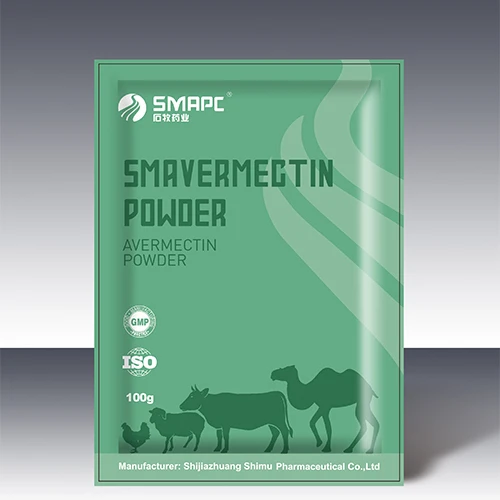
Product snapshot: Avermectin Powder from Hebei, China
Factory origin: South District of Shangzhuang Industry Zone, Shijiazhuang, Hebei, China. Composition: Each 1 g contains avermectin 20 mg (≈2% w/w). Indication: treatment of nematode disease, mite disease, and parasitic insect disease. It’s not a silver bullet for wounds, to be honest, but it can be part of a wider barn-care playbook—especially where parasites complicate skin integrity.
Where it fits next to classic veterinary wound powder
Traditional veterinary wound powder aims at moisture control and bioburden reduction (think zinc oxide, talc, chlorhexidine). Avermectin powder targets mites and certain parasitic insects; used around lesion margins (per vet direction), it can reduce reinfestation pressure. Many customers say that combining antiseptic cleansing + barrier powder + targeted parasite control improves outcomes on farms—surprisingly, even in hot, fly-prone months. However, it’s not a substitute for debridement or proper antisepsis.
Technical specifications (typical)
| Active content | Avermectin 20 mg/g (2% w/w), HPLC assay 95–105% of label |
| Form | Fine powder; carrier typically inert mineral/starch base |
| Particle size | D50 ≈ 60–120 μm (real-world use may vary) |
| Moisture | ≤ 5% w/w (LOD) |
| Packaging | HDPE jars or laminated sachets, 100 g–1 kg |
| Shelf life | 24–36 months sealed; store cool, dry, away from light |
| Testing | HPLC identity/assay; microbial limits; heavy metals; residual solvents (ICH/ VICH aligned) |
Process flow (condensed)
Materials: pharmaceutical-grade avermectin API + inert carrier. Methods: bin blending under GMP; in-process sieving for flow and uniformity. QC: HPLC assay (USP ), related substances, bioburden, content uniformity. Stability: ICH/VICH long-term and accelerated to confirm service life. Industries: livestock, equine, companion animals (vet-directed).
Application scenarios (with caution)
- Farm: dust perimeter around mite-affected skin while a separate veterinary wound powder handles exudate control.
- Equine: seasonal fly and midge pressure around minor abrasions—after cleaning and vet approval.
- Kennel/cattery: hotspot-prone areas where parasites aggravate lesions (always follow label and veterinary guidance).
Customer feedback, paraphrased: “Reduced scratching within two days,” “Easier to keep margins clean,” and “Worked best when paired with chlorhexidine wash.” Your mileage may vary.
Vendor comparison (indicative)
| Vendor | Origin | Active content | Quality system | Lead time | Custom carrier |
|---|---|---|---|---|---|
| Skyvet (Hebei) | China | 2% w/w (assay by HPLC) | GMP; ISO 9001 (reported) | ≈ 2–4 weeks | Available on request |
| Vendor A | EU | 1–3% options | EU GMP | ≈ 3–6 weeks | Limited |
| Vendor B | US | 2% w/w | ISO 9001 | ≈ 1–3 weeks | Yes |
Customization and testing
- Strengths: 1–3% w/w avermectin (per market rules).
- Carriers: talc, silica, or starch blends for flow; perfumed variants avoided near open wounds.
- Documentation: CoA with HPLC chromatogram, microbial limits, heavy metals; stability summary per VICH.
Two quick case notes
Dairy hock lesions, summer mites: Adding parasite dusting to a standard veterinary wound powder routine reduced reinfestation; fewer dressings needed over 10 days (n=12 stalls, observational).
Equine pastern irritation: After antiseptic wash, targeted application around margins cut rubbing behavior within 48 hours, according to barn staff. Always vet-supervised.
Regulatory note: Follow label instructions; consult your veterinarian. Not for deep or contaminated wounds without proper medical care.
References
- Merck Veterinary Manual. Macrocyclic Lactones (Avermectins) in Veterinary Medicine.
- VICH GL3(R). Stability Testing of New Veterinary Drug Substances and Medicinal Products.
- USP General Chapter <621> Chromatography.
- WOAH (OIE). Wound Management in Animals: General Principles and Biosecurity Guidance.
- EMA/CVMP. Guideline on Antiparasitic Veterinary Medicinal Products: Quality and Safety Considerations.
-
Choosing the Best Worm Medicine for Goats for Herd HealthNewsApr.16,2026
-
Comprehensive Guide to Professional Goat Medication and Herd HealthNewsApr.09,2026
-
Comprehensive Tick Treatment for Sheep A Guide to Control and PreventionNewsApr.07,2026
-
Comprehensive Guide to Effective Mite Treatment for Goats and PreventionNewsApr.04,2026
-
Comprehensive Veterinary Medicine for Sheep Health and Disease PreventionNewsMar.31,2026
-
Comprehensive Guide to Goat Health and Effective Goats Medicine SolutionsNewsMar.28,2026